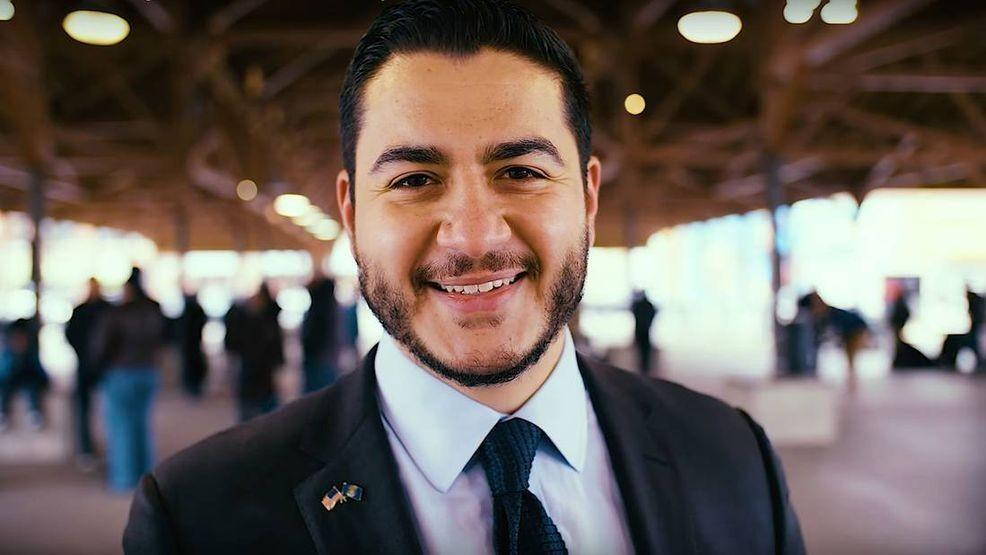
Michigan Sent a Message: People Vote With Their Wallets, Too
Abdul El-Sayed’s victory in Michigan’s Democratic primary for the U.S. Senate should be examined beyond his religion or ethnic background. His campaign focused on issues that directly affect the daily lives of millions of Americans: healthcare, housing, the cost of living, and the influence of money in politics.
Abdul El-Sayed’s recent victory in Michigan will generate headlines for many reasons. He is Muslim, of Egyptian descent, progressive, and he defeated Haley Stevens, a member of Congress who had significant support from the Democratic Party establishment.
But focusing primarily on El-Sayed’s religion would miss one of the most important lessons of this election.
El-Sayed campaigned on Medicare for All, affordable housing, lowering costs for working families, and reducing the influence of big money in American politics.
And voters responded.
The question should not be whether a candidate is Muslim, Jewish, Christian, Latino, Black or white.
The more important question is:
What is that candidate proposing to improve people’s lives?
The Everyday Economy Matters
The United States remains one of the world’s greatest economic, technological and military powers. American corporations rank among the most successful companies on Earth, and the American economy generates extraordinary wealth.
Yet millions of Americans continue worrying about much more basic questions.
How much will the rent or mortgage cost?
What happens financially if someone in the family becomes seriously ill?
How much will health insurance cost next year?
How much food can a paycheck buy?
Will their children ever be able to afford a home?
There is a contradiction here that American politics should not ignore.
Corporate profits are not inherently a problem. Profitable companies are essential to investment, innovation, employment and a successful market economy.
The political problem begins when people see enormous prosperity around them while believing that their own standard of living is not improving at the same pace.
A healthy economy needs successful businesses.
But it also needs workers who can live decently from the product of their labor.
Why Does America Spend So Much on Healthcare?
Healthcare may provide one of the clearest examples.
The United States spends considerably more per person on healthcare than the average among developed OECD economies.
Americans therefore have every right to ask whether they are receiving results proportional to what the country spends.
That is a legitimate question regardless of whether someone is Republican, Democrat, independent, conservative or progressive.
Healthcare reform should not automatically be reduced to an argument about capitalism versus socialism.
It should begin with a simpler question:
Can we build a system that works better for the American people?
What Can We Learn From Europe?
We should also avoid simplistic comparisons.
It would not be accurate to claim that every European lives better than every American. Europe contains very different countries, economies and standards of living, while the United States continues to offer extraordinary levels of income, innovation and economic opportunity.
But there are aspects of several European systems worth examining.
Citizens in many European countries have access to universal or broadly accessible healthcare, legally protected vacation time, family leave and stronger public social protections.
The United States historically chose a different model.
The answer is not to copy Europe blindly.
The question should be:
What can America learn from policies elsewhere that actually work?
A great nation cannot measure its greatness exclusively by the size of its economy, its military strength or the value of its corporations.
The quality of life of its citizens matters, too.
Big Money and American Politics
Another important part of El-Sayed’s campaign was his criticism of the enormous amount of money surrounding American elections.
This is not exclusively a left-wing or right-wing issue.
When millions of dollars from organizations, corporations, political groups and wealthy donors pour into elections, ordinary citizens have every right to ask how much their own voices matter.
Political campaigns will always require money. Communicating with voters, organizing volunteers, traveling and advertising all cost money.
But there is a difference between financing democracy and allowing financial power to determine who gets heard.
A healthy democracy must protect that distinction.
The Lesson From Michigan
That is why explaining Abdul El-Sayed’s victory simply by pointing to Michigan’s significant Muslim population would be far too easy.
His identity is obviously part of his personal story, and it may have mattered to some voters.
But there was something else.
There was a political program.
There were voters concerned about healthcare, housing, the cost of living and the influence of money on government.
That should be a warning to both major political parties.
Americans may eventually become tired of hearing only about who the enemy is, who belongs to the left, who belongs to the right, who is socialist, who is MAGA, who is progressive and who is conservative.
After all those arguments, a family still has to open the refrigerator, pay the rent, make the mortgage payment, receive the medical bill and check the balance in its bank account.
At that moment, politics takes on a very different meaning.
Put Citizens First
America does not need to abandon the market economy that helped make it one of the world’s great powers.
America needs to make that economy work better for more of its citizens.
Companies should be able to grow.
Entrepreneurs should be able to invest.
Innovation should be rewarded.
But workers should be able to prosper as well.
Someone who works honestly should reasonably be able to aspire to a home, affordable healthcare, adequate food, an education for their children and a dignified retirement.
Those aspirations should not belong exclusively to Democrats or Republicans.
They should be American aspirations.
Michigan has just offered the country an interesting political lesson.
Perhaps more Americans are beginning to look beyond the label attached to a candidate and pay closer attention to what that candidate proposes to do about their everyday lives.
Muslim, Jewish, Christian, Latino, Black or white, families ultimately face many of the same bills.
And politicians who understand that reality may also understand where part of the American electorate is heading.
Horizonte Cubano News
Opinion & Analysis