Categoría: “English Version”

  • Washington Negotiated With China. Why Not Cuba?

    By Pastor Herrera Macurán
    Horizonte Cubano News
    August 23, 2026

    There is a misconception surrounding the unresolved American property claims against Cuba.

    Some speak as though negotiating compensation with Havana would represent an unprecedented concession.

    It would not.

    The United States has been here before.

    And one of the clearest examples involves a government with which Washington had profound ideological and geopolitical differences:

    The People’s Republic of China.

    American citizens and companies had claims resulting from nationalizations and other property takings after the Chinese Communist Revolution.

    The United States documented those claims.

    The Foreign Claims Settlement Commission certified them.

    For years they remained unresolved.

    Then Washington did something remarkably practical.

    It negotiated.

    And American claimants received money.

    Perhaps Cuba deserves the same pragmatic approach.

    The China Numbers

    The historical record is straightforward.

    The Foreign Claims Settlement Commission adjudicated American claims against the People’s Republic of China arising from nationalizations, expropriations and other property losses.

    According to the Department of Justice, the China programs ultimately involved:

    381 awards

    representing approximately:

    $196,858,296 in principal

    The United States did not receive the entire certified amount.

    Instead, Washington and Beijing negotiated.

    On May 11, 1979, the governments of the United States and the People’s Republic of China concluded a formal claims settlement agreement.

    China agreed to pay:

    $80,500,000

    to the United States.

    Not $196.9 million.

    Not every dollar originally certified.

    $80.5 million.

    Why?

    Because international claims settlements are negotiations.

    The objective is not necessarily obtaining the theoretically largest number.

    The objective is reaching an agreement capable of producing actual payment.

    China Did Not Pay Everything at Once

    The payment structure is even more relevant to Cuba.

    China did not simply write Washington an $80.5 million check on the day the agreement was signed.

    The settlement established a payment schedule.

    China agreed to make an initial payment of:

    $30 million

    on October 1, 1979.

    Then China would make:

    Five annual payments of $10.1 million

    beginning October 1, 1980.

    The final installment was scheduled for 1984.

    Thirty million dollars initially.

    Five payments of $10.1 million.

    Total:

    $80.5 million.

    That is financial diplomacy.

    The Claimants Did Not Receive 100 Percent

    This is another important lesson.

    The settlement fund was smaller than the total principal value of the certified claims.

    Yet the agreement created something the claimants did not have before:

    money available for payment.

    The current FCSC summary reports that payments under the China claims programs amounted to an initial amount for qualifying awards plus a percentage of principal.

    In other words, Washington accepted a negotiated settlement rather than insisting indefinitely upon full nominal recovery.

    That is not unusual.

    Creditors make similar calculations throughout the financial world.

    What is worth more?

    One hundred percent of a debt that may never be collected?

    Or a negotiated percentage that actually gets paid?

    That question deserves consideration in the Cuban claims debate.

    Now Compare Cuba

    The Cuban numbers are much larger.

    The Foreign Claims Settlement Commission’s completed Cuba programs currently represent:

    5,913 awards

    with approximately:

    $1.902 billion in certified principal.

    And unlike China:

    there is still no comprehensive settlement.

    The original Cuba program was completed in 1972.

    The first China program was also completed in 1972.

    Look at what happened afterward.

    China:

    Claims certified.

    Negotiations.

    Agreement in 1979.

    Payments beginning in 1979.

    Final scheduled installment in 1984.

    Cuba:

    Claims certified.

    Decades of confrontation.

    No comprehensive claims agreement.

    No settlement fund.

    No general payment mechanism.

    And the creditors continue waiting.

    That comparison deserves attention.

    Washington Negotiated With Communist China

    This point matters politically.

    In 1979, China was not a liberal democracy.

    The Communist Party governed China.

    Washington had enormous disagreements with Beijing.

    Yet the United States did not conclude that ideological differences made financial negotiations impossible.

    President Jimmy Carter’s administration negotiated with the government that actually controlled the country and possessed the ability to enter into an agreement.

    That is what diplomacy requires.

    You negotiate with the government that exists.

    Not the government you wish existed.

    Negotiation Did Not Mean Approval

    The United States did not endorse every aspect of China’s political system by settling property claims.

    It settled a financial dispute.

    That distinction should be obvious.

    Washington can profoundly disagree with Havana about human rights, political freedoms, regional policy and other issues while simultaneously negotiating compensation for American claimants.

    One issue does not erase the others.

    Diplomacy allows governments to resolve specific disputes even when broader disagreements remain.

    The State Department Already Has a Role

    There is another similarity between the China and Cuba programs.

    The FCSC’s function was to determine claims.

    It was not created to conduct the final diplomatic settlement itself.

    The China claims were certified for use in future negotiations.

    The Cuba claims were likewise certified for potential use in a future negotiated settlement.

    And the Department of Justice currently makes clear that a Cuba settlement would involve the U.S. Department of State.

    Then perhaps the question should be directed there.

    Why are we not seriously exploring negotiations?

    Cuba Does Not Need to Pay $1.9 Billion Tomorrow

    The Chinese precedent demonstrates why insisting on an immediate full payment is unnecessary.

    Negotiations could address:

    Principal.

    Interest.

    Discounts.

    Payment periods.

    Claims priorities.

    Reciprocal Cuban claims.

    Blocked assets where applicable.

    Commercial arrangements.

    Financing.

    And other issues both governments bring to the table.

    The final settlement could differ substantially from the headline value of the certified claims.

    That would be for governments and claimants to evaluate.

    But first there must be negotiations.

    Imagine the Cuban Version

    Suppose Washington and Havana agreed upon a settlement amount after negotiations.

    That amount could potentially be paid over many years.

    There could be an initial payment.

    Annual installments could follow.

    A dedicated claims fund could receive the money.

    The United States could distribute payments according to legislation and the negotiated settlement.

    Other economic measures could be phased alongside Cuban compliance.

    That would not be identical to China.

    Cuba is Cuba.

    China is China.

    The legal, political and economic circumstances are different.

    But the precedent proves something important:

    Negotiated settlements are possible.

    Economic Normalization Can Help Produce Payment

    The China settlement occurred during a broader transformation of U.S.-China relations.

    The United States and China formally established diplomatic relations in January 1979.

    The claims agreement followed in May.

    Commercial relations subsequently expanded dramatically.

    The Cuban situation will obviously follow its own path.

    But there is a fundamental economic lesson.

    A country integrated into international commerce has greater capacity to generate foreign currency than an isolated and impoverished economy.

    If American claimants want Cuba to pay substantial financial obligations, they should have an interest in Cuba developing the economic capacity to make those payments.

    That means Washington should at least examine whether a negotiated claims settlement can become part of a broader process of economic normalization.

    The Objective Is Collection

    American policy should begin with the interests of the claimants.

    They have waited for decades.

    Some original claimants have died.

    Companies have changed.

    Claims have passed through generations and corporate successors.

    How much longer should everyone wait?

    If the objective is collecting money, policy should be evaluated according to whether it increases the probability of collection.

    Sanctions may provide negotiating leverage.

    Use that leverage.

    But leverage without negotiation eventually becomes simply permanent pressure.

    The purpose of leverage should be obtaining something.

    War Will Not Pay the Claims

    There is another reason the China precedent matters.

    Nobody needed to invade China to resolve the American property claims.

    Nobody needed to overthrow the Chinese Communist Party first.

    Washington negotiated with Beijing.

    Money was paid.

    That lesson should be remembered when people speak casually about military solutions for Cuba.

    War destroys economic capacity.

    Claims settlements require economic capacity.

    If American creditors want payment, destroying the infrastructure, businesses and productive assets of the debtor country would hardly be an intelligent collection strategy.

    Bombs do not pay creditors.

    Economic activity does.

    Cuba Is Not China — But We Can Learn From China

    No historical comparison is perfect.

    China’s size, strategic importance, blocked assets, economic circumstances and relationship with the United States were very different.

    We should not pretend otherwise.

    But precedents do not need to be identical to be useful.

    The China settlement demonstrates three principles applicable to Cuba.

    First:

    The United States can negotiate property claims with a communist government.

    Second:

    Washington can accept a negotiated amount below the nominal value of certified claims when doing so produces an actual settlement.

    Third:

    Payments can occur over time rather than through an impossible immediate lump sum.

    Those are valuable lessons.

    Mr. Secretary of State, Study the Precedent

    The State Department does not need to invent the concept of international claims settlement.

    American diplomatic history already contains numerous examples.

    China is one of them.

    The files exist.

    The agreement exists.

    The payment mechanism existed.

    American claimants received distributions.

    Study what worked.

    Study what would have to be different for Cuba.

    Consult the claimants.

    Consult Congress.

    Consult financial experts.

    Determine Cuba’s realistic payment capacity.

    Identify possible negotiating leverage.

    And determine whether a settlement framework can finally be developed.

    After more than sixty years, simply repeating that Cuba owes money is no longer sufficient.

    The objective should be collecting it.

    From $196.9 Million on Paper to $80.5 Million in a Fund

    That is perhaps the most important lesson from China.

    American claims represented approximately:

    $196.9 million in principal.

    The negotiated fund was:

    $80.5 million.

    And the money was actually paid according to an agreed schedule.

    That is the difference between a claim and a settlement.

    One exists on paper.

    The other creates money available for distribution.

    Cuba currently has approximately:

    $1.902 billion in certified principal claims.

    Those claims have remained unresolved for decades.

    Washington now has a choice.

    Continue waiting for some undefined political event that may occur someday.

    Or begin exploring whether diplomacy can transform those certificates into actual payments.

    China demonstrates that negotiation is not surrender.

    It is not ideological approval.

    And it is not forgetting confiscated property.

    It is how creditors begin getting paid.

    Washington negotiated with Beijing.

    American claimants received money.

    So after more than six decades of waiting, there is a perfectly reasonable question for the United States government:

    Why not negotiate with Cuba?

    Pastor Herrera Macurán is the founder of Horizonte Cubano News. The views expressed in this article are those of the author.
  • Mr. Secretary of State: It Is Time to Negotiate

    The United States government already has the claims.

    It already has the valuations.

    It already has decades of documentation.

    And the Foreign Claims Settlement Commission has already done much of the work necessary to establish which claims were compensable and their certified principal amounts.

    What is missing is not another political speech.

    What is missing is negotiation.

    The FCSC itself states that settlement negotiations are not its responsibility. That responsibility belongs to the diplomatic process in which the U.S. Department of State would be involved.

    Then perhaps it is time for the Department of State to begin treating these claims as what they ultimately are:

    An unresolved international financial dispute that requires negotiation.

    There are currently 5,913 certified awards representing $1,902,202,284.95 in principal.

    They remain unpaid.

    Another ten years of confrontation will not pay them.

    Another fifty sanctions will not automatically pay them.

    Another political rally in Miami will not pay them.

    And waiting indefinitely for regime change will not pay them.

    Negotiation might.

    Diplomacy Is Not Surrender

    Opening negotiations with Havana would not require Washington to forgive the claims.

    Quite the opposite.

    The purpose of negotiations would be to obtain compensation.

    The United States should arrive at the negotiating table representing the interests of American claimants and demanding a credible settlement.

    Cuba would understandably negotiate the amount, interest, payment schedule and other outstanding bilateral claims.

    That is what governments do.

    The objective should be an enforceable agreement capable of transforming certified claims into actual payments.

    There Is Precedent

    The United States has resolved claims against governments with which it had profound political disagreements.

    Claims settlement is not an endorsement of another country’s political system.

    It is diplomacy applied to an outstanding financial obligation.

    The question Washington should ask is not whether it approves of the Cuban government.

    The question is whether negotiating with that government today offers American creditors a better possibility of recovering money than waiting indefinitely for another government to appear someday.

    After more than sixty years, the answer deserves serious consideration.

    Negotiate From Strength — But Negotiate

    Washington does not have to abandon leverage before negotiations begin.

    Sanctions relief, commercial access, investment opportunities and eventual broader economic normalization all have potential negotiating value.

    Use that leverage.

    Cuba wants greater access to capital and markets.

    The United States wants outstanding claims addressed.

    Those interests create the basis for negotiation.

    A settlement could establish measurable stages:

    Cuba makes payments.

    Washington provides agreed economic measures.

    Cuba implements additional obligations.

    Additional restrictions are reconsidered where legally possible.

    Compliance is verified.

    And the process continues.

    Where congressional action is required, Congress should participate.

    That is not appeasement.

    That is negotiation backed by leverage.

    Replace the Language of War With the Language of Settlement

    There are voices that continue talking about military intervention in Cuba.

    But an invasion will not deposit $1.9 billion into the accounts of American claimants.

    War could destroy precisely the infrastructure and productive capacity Cuba would need to generate revenue for compensation.

    If the objective is recovering money, destroying the debtor’s capacity to produce money makes little economic sense.

    American creditors need something very different.

    They need a Cuba capable of producing.

    A Cuba capable of attracting investment.

    A Cuba capable of exporting.

    A Cuba capable of generating revenue.

    And ultimately:

    A Cuba capable of paying its debts.

    The Department of State should therefore begin exploring whether the moment has arrived for serious government-to-government discussions over the certified American claims.

    Not because Washington should forget history.

    Not because Havana should receive a blank check.

    And certainly not because the United States should abandon its legitimate concerns about Cuba.

    But because foreign policy should eventually produce results.

    After more than sixty years, American creditors deserve more than promises that someday, somehow, someone will pay them.

    They deserve an attempt to negotiate a settlement.

    It is time to replace speculation about war with the difficult work of diplomacy.

    Mr. Secretary of State: the claims are certified. The numbers are known. The creditors are waiting.

    It is time to negotiate.

  • Mr. Díaz-Canel, We Agree That Cubans Are Suffering. Now Let’s Talk About Why.

    By Pastor Herrera Macurán
    Horizonte Cubano News
    August 23, 2026

    President Miguel Díaz-Canel has said something with which many of us can agree:

    The Cuban people are suffering.

    In his recent interview with Brazil’s Folha de S.Paulo, the Cuban president described an extraordinarily difficult reality: prolonged blackouts, shortages of medicines, transportation problems, lack of fuel and growing difficulties affecting virtually every aspect of daily life.

    On this point, Mr. President, we do not need an ideological argument.

    The suffering is real.

    Where we need a much more serious conversation is over why it exists — and what both Havana and Washington are prepared to do about it.

    Because after more than sixty years, blaming only the other side is no longer sufficient.

    Washington Bears Responsibility for Washington’s Policies

    Let us begin with something that parts of the Cuban-American political establishment sometimes appear reluctant to acknowledge.

    American sanctions have consequences.

    When financial transactions become more difficult, there are consequences.

    When shipping becomes more complicated or expensive, there are consequences.

    When energy supplies are restricted, there are consequences.

    When companies fear doing business with Cuba because of American sanctions or possible secondary consequences, there are consequences.

    Those effects do not remain confined to an office of the Cuban government.

    Eventually they travel through the economy.

    And somewhere at the end of that economic chain is an ordinary Cuban.

    A mother.

    A pensioner.

    A worker.

    A child.

    A small entrepreneur.

    Recognizing this does not require defending the Cuban government.

    It requires recognizing reality.

    But Havana Must Accept Responsibility Too

    President Díaz-Canel cannot place sixty years of Cuban economic problems entirely at Washington’s door.

    American sanctions did not create every inefficient Cuban enterprise.

    They did not create every bureaucratic obstacle.

    They did not make every agricultural decision.

    They did not establish every restriction on private enterprise.

    They did not determine every monetary policy.

    They did not create every internal barrier confronting Cuban entrepreneurs.

    The Cuban government itself now acknowledges the need for significant economic changes and has recently expanded opportunities for private enterprise and investment.

    That is important.

    But it also raises an obvious question:

    If reforms are necessary today, why were so many of them delayed for so long?

    Washington should answer for Washington.

    Havana should answer for Havana.

    The Cuban people should not be required to choose which government’s mistakes they are permitted to criticize.

    Now Let Us Discuss the Debt History Created

    There is another subject both countries have avoided resolving for far too long.

    The properties confiscated after the Cuban Revolution.

    This is not merely political rhetoric.

    The United States Foreign Claims Settlement Commission completed a formal claims process involving properties and other assets taken by the Cuban government.

    Thousands of claims were certified.

    Those claims did not disappear because decades passed.

    And they will not disappear because Washington and Havana prefer arguing about other subjects.

    They represent an unresolved financial dispute between our countries.

    It is time to negotiate it.

    Compensation Must Finally Enter the Conversation

    For decades, American policy has treated confiscated property as part of the historical justification for confrontation with Cuba.

    Fine.

    Then let us resolve the issue.

    Sit down.

    Identify the certified claims.

    Determine the legally recognized amounts.

    Distinguish among different categories of claims.

    Negotiate interest.

    Examine possible settlement mechanisms.

    Establish a timetable.

    And create a structure through which legitimate creditors can finally receive compensation.

    That is what negotiations are for.

    Repeating for another sixty years that Cuba confiscated American property will not compensate a single claimant.

    A settlement might.

    Cuba Cannot Pay Without an Economy Capable of Paying

    Here is where American policy encounters an obvious contradiction.

    If Cuba owes money, Cuba needs the economic capacity to pay it.

    A country experiencing severe shortages, limited access to international finance, deteriorated infrastructure, restricted trade and chronic economic crisis is not in an ideal position to settle billions of dollars in historical claims.

    So Washington must decide what it actually wants.

    Does it want the claims to remain permanent symbols of political confrontation?

    Or does it want creditors eventually to receive money?

    If the objective is compensation, then economic normalization must become part of the discussion.

    A Cuba capable of producing, trading, attracting legitimate investment and generating revenue is a Cuba more capable of paying its debts.

    That should be obvious.

    Put Everything on the Negotiating Table

    Imagine a serious negotiation between Washington and Havana.

    Not another symbolic meeting.

    A negotiation with measurable objectives.

    Certified property claims.

    Other legitimate outstanding claims between both governments.

    Economic sanctions.

    Banking restrictions.

    Commercial relations.

    Investment protections.

    Private enterprise.

    Migration.

    Human rights.

    Political prisoners.

    Security concerns.

    Energy.

    Transportation.

    Agriculture.

    And the gradual normalization of economic relations.

    Nothing should be automatically surrendered.

    Everything should be negotiable.

    The United States should demand concessions.

    Cuba should demand concessions.

    That is diplomacy.

    Create a Claims Settlement Fund

    One possibility deserves serious examination.

    A future agreement could establish a dedicated Cuba-U.S. Claims Settlement Fund.

    Payments could potentially come from several negotiated sources over time rather than requiring Cuba to produce an impossible lump-sum payment.

    For example, subject to law and negotiation, funding mechanisms could be connected to future commercial activity, agreed government payments, privatization or investment transactions, or other revenue streams acceptable to both governments.

    The details would require economists, lawyers, claimants, both governments and ultimately Congress where legislation is necessary.

    But the principle matters.

    Turn an unresolved historical grievance into a payable financial obligation.

    Creditors do not benefit from eternal confrontation.

    They benefit from getting paid.

    The Embargo Must Be Part of That Negotiation

    This is where American politics must become realistic.

    If Cuba enters into a credible, enforceable agreement to compensate legitimate claims and undertakes meaningful economic reforms, the United States should be prepared to discuss corresponding steps toward dismantling the embargo and broader sanctions architecture.

    Some restrictions can be addressed through executive authority.

    Others are embedded in federal law and would require congressional action.

    Then Congress should debate them.

    The objective should be a negotiated sequence.

    Cuba takes a measurable step.

    The United States takes a measurable step.

    Cuba complies with another obligation.

    Washington removes another restriction where legally possible.

    Verification follows.

    Progress produces progress.

    Failure produces consequences.

    That is more rational than demanding unconditional surrender from either side.

    Waiting for an Invasion Is Not a Financial Strategy

    There are people who continue imagining that someday the United States will invade Cuba, the existing government will disappear and all these historical problems will somehow be resolved afterward.

    That is not a serious strategy.

    There is no reason today to assume an American invasion of Cuba is imminent.

    And building economic policy around waiting for one would be irresponsible.

    What happens if there is no invasion in five years?

    Ten years?

    Twenty?

    Do the claimants simply continue waiting?

    Do their children inherit certificates representing disputes that neither government ever seriously attempted to settle?

    Eventually realism must replace fantasy.

    An invasion is not a debt-collection mechanism.

    Negotiation is.

    Mr. Díaz-Canel, This Requires Something From Cuba Too

    If Havana wants Washington to reconsider sanctions, Cuba must be prepared to discuss the issues Washington cannot simply pretend never happened.

    Confiscated property is one of them.

    Political and human-rights concerns are another.

    Economic transparency matters.

    Investment protections matter.

    The ability of businesses to operate under predictable rules matters.

    Foreign investors will not commit enormous amounts of capital to Cuba if they believe today’s investment can become tomorrow’s confiscation.

    Resolving historical claims would therefore accomplish something larger than compensating old creditors.

    It could help establish credibility for future investment.

    Cuba needs that credibility.

    And Washington Must Decide Whether It Wants Results

    American policymakers face their own choice.

    If the objective is permanent confrontation, continue doing what we have done.

    More sanctions.

    More speeches.

    More accusations.

    More waiting.

    But if the objective is producing measurable results, then negotiation should not be treated as surrender.

    Imagine what success could eventually look like:

    American claimants receiving compensation.

    Cuban private businesses gaining greater access to capital and markets.

    American companies entering lawful commercial opportunities.

    Cuban families experiencing greater economic opportunity.

    Migration pressure declining because more Cubans can imagine a future at home.

    Washington maintaining leverage through enforceable agreements rather than permanent isolation.

    And Havana accepting that access to greater economic normalization carries obligations.

    That would not solve every disagreement between our countries.

    It would solve something.

    After sixty years, that would already be progress.

    Let Us Begin With the Truth

    President Díaz-Canel is correct about one thing.

    Cubans are suffering.

    Now comes the harder part.

    Washington must acknowledge where American policy contributes to that suffering.

    Havana must acknowledge where its own policies created or intensified it.

    And both governments must stop treating unresolved historical disputes as political museum pieces.

    The confiscation claims should be negotiated.

    Legitimate creditors should be compensated.

    Cuba should implement serious reforms.

    The United States should be prepared to dismantle sanctions and, with Congress where necessary, move toward ending the embargo as verifiable agreements are fulfilled.

    Neither government will obtain everything it wants.

    That is precisely why negotiations exist.

    The alternative is another generation of sanctions, shortages, migration, political speeches and unpaid claims.

    And eventually we must ask:

    Who benefits from that?

    Certainly not the Cuban people.

    And certainly not creditors who have spent more than six decades waiting to be paid.

    Mr. Díaz-Canel, we agree that Cubans are suffering.

    Now let us finally have the harder conversation about why — and about what both governments are prepared to change.

    Pastor Herrera Macurán is the founder of Horizonte Cubano News. The views expressed in this article are those of the author.

  • Deportation Is Immigration Enforcement — Exile Is Something Else

    By Pastor Herrera Macurán
    Horizonte Cubano News

    The United States has the sovereign right to enforce its immigration laws.

    That principle should not be controversial.

    People who enter or remain in the country without legal authorization may face immigration proceedings and, when the law requires it and due process has been completed, removal from the United States.

    But there is another question Americans should be willing to ask:

    Where does legitimate immigration enforcement end, and where does something resembling forced exile begin?

    The distinction matters.

    A Government Can Enforce the Law Without Abandoning Its Principles

    Immigration policy is one of the most difficult responsibilities of any government.

    Borders must be controlled. Immigration laws must mean something. Courts must be respected, and removal orders cannot simply become optional.

    But enforcement alone does not define the American system.

    Due process does.

    Human dignity does.

    Individual circumstances matter.

    And government power must always have limits.

    A person subject to deportation is still a human being with a name, a history, a family and legal rights.

    The government should never forget that distinction.

    The Troubling Question of Third Countries

    Particularly serious questions arise when migrants are removed not to their country of nationality, but potentially to third countries with which they may have little or no meaningful connection.

    This practice deserves much greater public scrutiny.

    Americans should ask:

    Why is that particular country receiving the individual?

    What agreement exists between the governments?

    What legal protections will the deported person have upon arrival?

    Can that person communicate with family members and attorneys?

    Can the United States adequately determine whether the person could face persecution, torture, arbitrary detention or other serious mistreatment?

    And what happens after the airplane lands?

    These questions are not arguments for open borders.

    They are arguments for accountable government.

    Deportation Should Never Become Punishment Beyond the Law

    Immigration removal is a civil enforcement mechanism. It should not be transformed into an additional punishment designed to make an example of someone.

    When a person has completed a criminal sentence, that sentence should not quietly be replaced by an indefinite system of additional punishment through immigration policy.

    If deportation is legally required, enforce the law.

    But enforce it transparently.

    The destination should comply with American law and international obligations. Individual protection claims should receive meaningful consideration. People should have access to the procedures the law provides.

    Government efficiency cannot replace due process.

    The Rule of Law Works in Both Directions

    Political discussions about immigration often focus almost exclusively on whether immigrants obeyed the law.

    That is a legitimate question.

    But there is another equally important question:

    Did the government obey the law while enforcing it?

    The rule of law cannot operate in only one direction.

    Government agencies should be held to legal standards just as individuals are.

    If an immigrant violates immigration law, the government has mechanisms to respond.

    If a government official exceeds lawful authority, there must also be mechanisms for courts, inspectors general, Congress and ultimately the public to demand accountability.

    That is not weakness.

    That is constitutional government.

    America Does Not Need to Choose Between Borders and Humanity

    The immigration debate has become trapped between two political extremes.

    One side sometimes behaves as though almost any enforcement measure is inherently immoral.

    The other sometimes treats harshness itself as evidence that immigration policy is working.

    Neither approach is sufficient.

    The United States can maintain secure borders.

    It can deport individuals when the law requires removal.

    It can prioritize dangerous offenders.

    It can demand compliance with immigration decisions.

    And at the same time, it can insist upon due process, proportionality, transparency and humane treatment.

    Those principles are not contradictory.

    They are precisely what should distinguish a nation governed by law.

    Congress Must Exercise Oversight

    Congress should closely examine the use of third-country removals and demand transparency about agreements governing them.

    Lawmakers should know where people are being sent, what protections exist after their arrival, how receiving governments are selected, how much these arrangements cost taxpayers, and what procedures exist for individuals who fear serious harm in the destination country.

    Immigration policy cannot operate as a black box.

    The executive branch needs authority to enforce immigration law.

    But authority without oversight eventually becomes dangerous, regardless of which political party controls the White House.

    A Strong Country Does Not Need Cruelty to Demonstrate Strength

    America can enforce its borders without abandoning its values.

    It can remove people who have no lawful right to remain while recognizing their fundamental human dignity.

    It can demand respect for its laws while requiring its own government to respect those same laws.

    And it can distinguish between legitimate deportation and policies that risk turning immigration enforcement into something much more troubling.

    Enforce the law.

    Respect due process.

    Protect the border.

    But never confuse cruelty with strength.

    Because the character of a nation is measured not only by the laws it enforces, but also by the way it exercises power over people who have very little power themselves.

    Pastor Herrera Macurán is the founder of Horizonte Cubano News. The views expressed in this article are those of the author.

  • Invading Cuba Is Not a Cuba Policy

    By Pastor Herrera Macurán
    Horizonte Cubano News

    For more than six decades, Cuba has been trapped in a political confrontation that has produced plenty of slogans but very few durable solutions.

    Today, as Cuba faces one of the most serious economic and social crises in its modern history, some voices outside the island are once again presenting military intervention as the answer.

    It is easy to call for an invasion from a microphone, a television studio, a political rally, or the safety of another country.

    It is much harder to explain what happens the morning after the first bomb falls.

    An invasion is not a Cuba policy.

    It is the beginning of a war.

    Who Would Pay the Price?

    Any serious discussion about military intervention must begin with the people who would actually live through it.

    Cuban families would be caught between military forces. Civilian infrastructure could be damaged. Electricity, transportation, communications, hospitals, ports, food distribution, and water systems could be disrupted precisely when the population is already suffering from shortages.

    And the consequences would not remain inside Cuba.

    A major conflict only 90 miles from Florida could generate another migration emergency in the Caribbean, placing enormous pressure on the United States, neighboring countries, and regional governments.

    Those demanding intervention should therefore answer a simple question:

    Who pays the human price?

    The answer will not primarily be politicians in Washington or activists in Miami.

    It will be ordinary Cubans.

    Cuba Needs Change — But Cubans Need a Future

    Recognizing the dangers of military intervention does not require defending the Cuban government.

    Cuba needs profound economic reforms. It needs political reforms. It needs institutions capable of responding to the aspirations of younger generations and an economy that allows citizens to build prosperous lives without depending permanently on the state, remittances, or emigration.

    The Cuban government also has responsibilities it cannot indefinitely avoid.

    But Washington has responsibilities as well.

    For decades, American policy toward Cuba has moved repeatedly between sanctions, isolation, migration restrictions, diplomatic confrontation, and expectations that economic pressure would eventually produce political transformation.

    The results deserve serious examination.

    After more than sixty years, the fundamental political conflict remains unresolved, while millions of Cubans have left the island.

    Repeating policies simply because they are familiar is not strategy.

    The United States Should Defend Its Interests

    The United States has legitimate national-security interests in Cuba and the Caribbean.

    Washington should be concerned about migration, narcotics trafficking, foreign military or intelligence activity, regional instability, human rights, economic security, and the presence of strategic competitors close to American territory.

    But protecting those interests does not automatically require invading Cuba.

    A serious Cuba policy should combine diplomacy, economic engagement where legally possible, pressure against individuals and institutions responsible for abuses, support for legitimate private economic activity, migration agreements that are enforceable and humane, and direct communication between the two governments when American interests require it.

    Foreign policy should be judged by results, not by applause lines.

    Listen to Cubans — Including Those Who Live in Cuba

    There is another uncomfortable reality in the Cuba debate.

    Too often, people outside the island speak on behalf of eleven million people without actually asking them what they want.

    Cubans living on the island are not a political abstraction.

    They are workers, retirees, entrepreneurs, farmers, students, professionals, mothers and fathers trying to survive an extraordinarily difficult economic environment.

    Their opinions will not all be identical.

    Some want political transformation. Some prioritize economic stability. Some want greater private enterprise. Others simply want electricity, food, transportation, medicine, decent salaries, and the possibility of keeping their families together.

    A responsible American policy should be capable of listening to those voices without demanding ideological loyalty as the price of being heard.

    There Must Be Another Choice

    For too long, the Cuba debate has been presented as though only two alternatives exist:

    Accept the status quo or invade the island.

    That is a false choice.

    There is enormous political territory between unconditional acceptance and military intervention.

    Diplomacy exists.

    Negotiation exists.

    Economic engagement exists.

    Targeted pressure exists.

    Humanitarian cooperation exists.

    Migration agreements exist.

    Private-sector development exists.

    And, above all, patient political strategy exists.

    The objective should not be to win another ideological argument about Cuba.

    The objective should be to create conditions under which Cuban families can envision a future on their own island while the United States protects its legitimate interests and encourages peaceful economic and political evolution.

    Before Anyone Calls for War

    Those advocating military intervention should be required to answer several questions.

    How many Cuban civilian casualties would be acceptable?

    How many American casualties?

    Who would govern Cuba afterward?

    Who would rebuild the country’s infrastructure?

    How would Washington prevent a massive migration crisis?

    How long would American forces remain?

    How much would reconstruction cost American taxpayers?

    And what happens if the Cuban people themselves reject the political arrangements designed for them from abroad?

    These are not arguments for preserving the status quo.

    They are arguments for seriousness.

    Cuba unquestionably needs change.

    But destroying a country in order to change it would be one of the most dangerous mistakes the United States could make in the Caribbean.

    Cuba needs a future.

    The United States needs a strategy.

    And an invasion is not a strategy.

    Pastor Herrera Macurán is the founder of Horizonte Cubano News. The views expressed in this article are those of the author.

  • If American Creditors Want to Be Paid, Cuba Must Be Able to Pay

    By Pastor Herrera Macurán
    Horizonte Cubano News

    For more than six decades, the United States and Cuba have carried an unresolved financial dispute worth billions of dollars.

    This is not an estimate invented for a political speech.

    According to the Foreign Claims Settlement Commission of the United States (FCSC), the two completed Cuban claims programs produced 5,913 awards with a combined certified principal amount of $1,902,202,284.95.

    That is approximately $1.9 billion in principal alone.

    And the United States government states clearly that these claims have not been settled with Cuba.

    So after more than sixty years, there is a simple question that deserves a serious answer:

    How exactly are these creditors going to get paid?

    A certified claim can establish an obligation.

    But a claim is not a check.

    If American creditors ultimately want payment, Washington and Havana must eventually move beyond political confrontation and design a financial mechanism capable of producing actual money.

    And that leads to an uncomfortable economic reality:

    If American creditors want Cuba to pay billions of dollars in historical claims, Cuba must possess an economy capable of generating the money to pay them.

    $1.9 Billion in Principal — Before Considering Decades of Interest

    The numbers matter.

    The original Cuban Claims Program was completed in 1972.

    The Commission adjudicated 8,816 claims and determined that 5,911 were compensable, with an adjudicated principal value of:

    $1,851,057,358.00

    A second Cuban Claims Program was conducted decades later.

    Two additional claims were certified, including one for:

    $51,128,926.95

    and another for:

    $16,000.00

    Taken together, the FCSC currently reports:

    5,913 awards

    with total principal of:

    $1,902,202,284.95

    That figure is principal.

    The historical claims framework also involves interest considerations, meaning the economic exposure associated with resolving these decades-old obligations can be substantially greater than the original principal.

    That is precisely why Washington and Havana need a negotiated settlement rather than another generation of political slogans.

    A Claim Is Not the Same as a Payment

    These claims represent legitimate unresolved financial issues between the United States and Cuba.

    They should not simply disappear.

    Property rights matter.

    Contracts matter.

    Compensation matters.

    And any serious future normalization of economic relations between Cuba and the United States should address them.

    But recognizing a debt and collecting a debt are two completely different things.

    A creditor ultimately needs more than a certificate saying:

    $1,000,000 owed.

    Or:

    $10,000,000 owed.

    Or:

    $50,000,000 owed.

    The creditor eventually needs money.

    And money requires cash flow.

    Where Will $1.9 Billion — Plus Whatever Is Negotiated — Come From?

    This is the question that should dominate the next phase of the discussion.

    Suppose Washington and Havana sit down tomorrow and agree that the certified claims should finally be settled.

    Where does Cuba obtain approximately $1.9 billion in principal, much less whatever additional amount might ultimately result from a negotiated settlement?

    Cuba already faces enormous economic difficulties.

    Its electrical system requires investment.

    Railroads require investment.

    Ports require investment.

    Water infrastructure requires investment.

    Agriculture requires equipment and financing.

    Housing requires capital.

    Industry requires modernization.

    Foreign currency remains scarce.

    The country has other international financial obligations as well.

    Demanding billions of dollars from an economy in that condition may produce a politically satisfying statement.

    It does not necessarily produce payment.

    A serious settlement therefore requires an economic strategy.

    Creditors Need a Cuba That Generates Revenue

    This creates an unusual convergence of interests.

    American creditors need repayment.

    Cuba needs investment.

    American businesses may eventually want access to commercial opportunities.

    Cuban businesses need capital and markets.

    Washington wants leverage.

    Havana wants greater access to the international economy.

    Those interests do not have to remain permanently incompatible.

    A growing Cuban economy generates revenue.

    Exports generate revenue.

    Productive businesses generate revenue.

    Tourism generates revenue.

    Modern transportation can generate revenue.

    Modern ports can generate revenue.

    Energy investment can support revenue-producing industries.

    Expanded lawful trade can generate revenue.

    The question should therefore become:

    Can part of Cuba’s future economic growth be structured to resolve its past financial obligations?

    That is a much more useful question than waiting another sixty years.

    Create a Cuba-U.S. Claims Settlement Mechanism

    Washington and Havana should eventually negotiate a comprehensive claims settlement agreement.

    The claims have already been waiting for decades.

    The first major American claims program ended in 1972.

    It is now 2026.

    That means another 54 years have passed without a comprehensive settlement.

    How much longer should creditors wait?

    Ten more years?

    Twenty?

    Another fifty?

    Instead, the governments should begin examining a structured settlement.

    Claims would need to be categorized.

    Principal amounts would need to be recognized according to whatever methodology the parties negotiate.

    Interest would have to be addressed.

    Payment schedules would have to be realistic.

    Disputes would require resolution mechanisms.

    And the legitimate rights of claimants would have to be protected.

    The objective should not be demanding an economically impossible payment tomorrow.

    The objective should be designing payments that actually arrive.

    A Cuba-U.S. Claims Settlement Fund

    One option deserves serious examination:

    A dedicated Cuba-U.S. Claims Settlement Fund.

    Imagine that Washington and Havana negotiate an agreement establishing a long-term mechanism for paying the approximately $1.9 billion in certified principal, together with whatever additional amounts are ultimately agreed upon.

    The fund could potentially receive money from multiple negotiated sources over time.

    Depending upon applicable American and Cuban law, those sources could be examined in connection with future commercial revenues, investment transactions, privatization proceeds where applicable, agreed government contributions, infrastructure concessions or other lawful revenue streams.

    The precise structure would require extensive professional analysis.

    Economists would have to model the revenue.

    Lawyers would have to determine what American and Cuban law permits.

    Financial institutions would have to establish mechanisms capable of processing payments.

    Claimants would need representation.

    Governments would have to negotiate.

    Investors would need protections.

    But complicated financial problems are solved every day.

    The fact that a problem is difficult does not justify leaving it unresolved forever.

    Imagine a 20-Year Settlement

    Consider a purely illustrative example.

    Take the approximately $1.9 billion principal currently reported by the FCSC.

    Ignoring interest and other negotiating adjustments for the moment, dividing $1.9 billion evenly across twenty years would represent approximately:

    $95 million per year.

    That does not mean $95 million annually is the correct settlement.

    It is simply an illustration.

    Real negotiations would have to address interest, claim priorities, payment schedules, Cuba’s capacity to pay, possible lump-sum discounts, financing structures and numerous other factors.

    But the example demonstrates something important.

    A figure that appears almost impossible as an immediate lump-sum payment can look very different when converted into a long-term financial structure.

    That is what negotiation can accomplish.

    Investment Could Help Produce the Money

    Cuba needs enormous amounts of infrastructure investment.

    Electricity.

    Railroads.

    Ports.

    Water.

    Telecommunications.

    Agriculture.

    Housing.

    Tourism.

    Manufacturing.

    Transportation.

    Those needs could eventually create economic opportunities.

    A properly designed normalization process could examine whether economic development and debt settlement can reinforce one another.

    Future infrastructure and commercial projects can generate revenues.

    Subject to applicable laws and negotiated agreements, a portion of certain future revenue streams could potentially contribute to a claims settlement mechanism.

    That would create a fundamentally different relationship between Cuba’s past and its future.

    Development would help finance settlement.

    And settlement could help create confidence for additional development.

    Resolving Old Claims Could Unlock New Capital

    Investors examine risk.

    One of the questions any serious investor asks is:

    What happens to my property?

    Can contracts be enforced?

    Can rules change after I invest?

    Can my assets be taken?

    How are disputes resolved?

    Cuba’s unresolved confiscation history inevitably affects those questions.

    Resolving the American claims could therefore produce a benefit extending far beyond the claimants themselves.

    It could send a message to future investors:

    Historical obligations are being addressed.

    New investment will operate under clearer protections.

    Contracts will matter.

    Property rights will matter.

    That credibility has economic value.

    Creditors Should Ask What They Actually Want

    American claimants and their successors should ultimately decide what arrangements they are willing to accept.

    But there is a fundamental economic question worth asking.

    Which has greater value?

    A claim for a large amount that remains unpaid indefinitely?

    Or a negotiated settlement producing actual payments over time?

    Some creditors may prefer waiting.

    Others may prefer settlement.

    That choice belongs to them.

    But after more than half a century without a comprehensive settlement, they deserve a realistic pathway toward payment.

    Washington Must Participate Too

    Cuba cannot realistically generate substantially greater economic activity with the United States while every major economic restriction remains permanently unchanged.

    A claims settlement therefore should become part of a larger negotiation.

    As Cuba makes verified payments and fulfills agreed economic obligations, Washington should be prepared to provide corresponding economic measures where existing executive authority permits.

    Where congressional legislation is required, Congress should debate it.

    The objective should be a road map.

    Payment for normalization.

    Reform for investment.

    Compliance for expanded economic opportunity.

    Verification at every stage.

    Neither side should be expected to surrender everything at the beginning.

    Both sides should be required to perform.

    Stop Waiting for Regime Change to Solve a $1.9 Billion Problem

    For decades, some have assumed that Cuba’s political system would eventually collapse and another government would resolve the claims.

    Maybe Cuba will undergo fundamental political change someday.

    Maybe it will not.

    Nobody knows when.

    That is not a financial strategy.

    Creditors cannot deposit political predictions into bank accounts.

    And waiting for an American military intervention is even less realistic as a debt-collection strategy.

    An invasion is not a payment mechanism.

    A regime change is not a payment schedule.

    A political speech is not a wire transfer.

    Negotiation is how governments settle international claims.

    Indeed, the FCSC itself explains that its certifications were intended for use by the U.S. government in negotiating a future claims settlement agreement with Cuba.

    The mechanism was always supposed to lead eventually toward negotiation.

    It is time to use it.

    Turn $1.9 Billion From a Historical Dispute Into a Financial Agreement

    The numbers are now sitting in government records.

    5,913 awards.

    $1,902,202,284.95 in principal.

    And still no comprehensive settlement.

    Those numbers should not remain political museum pieces for another generation.

    They should become the starting point for negotiations.

    Imagine a different equation:

    Cuba reforms.

    Investment enters.

    Businesses grow.

    Infrastructure improves.

    Economic activity generates revenue.

    A negotiated portion of agreed revenues contributes to settling historical claims.

    Creditors begin receiving payments.

    Economic restrictions are progressively reconsidered as obligations are fulfilled.

    Commercial relationships expand.

    And Cuba becomes increasingly capable of paying precisely because its economy becomes increasingly capable of producing.

    That would transform an unresolved dispute into an economic mechanism.

    It would require lawyers.

    Economists.

    Financial specialists.

    Investors.

    Claimant representatives.

    Government negotiators.

    Infrastructure experts.

    And professionals capable of connecting projects, capital, legal requirements and commercial opportunities across two countries separated by more than sixty years of political confrontation.

    That will not be simple.

    But complicated does not mean impossible.

    After more than six decades, perhaps Washington and Havana should begin with the most basic accounting question of all:

    How do we turn $1,902,202,284.95 on paper into money actually paid to creditors?

    Because if American creditors truly want to be paid, they should also want something else:

    A Cuba capable of paying them.

    Pastor Herrera Macurán is the founder of Horizonte Cubano News. The views expressed in this article are those of the author.

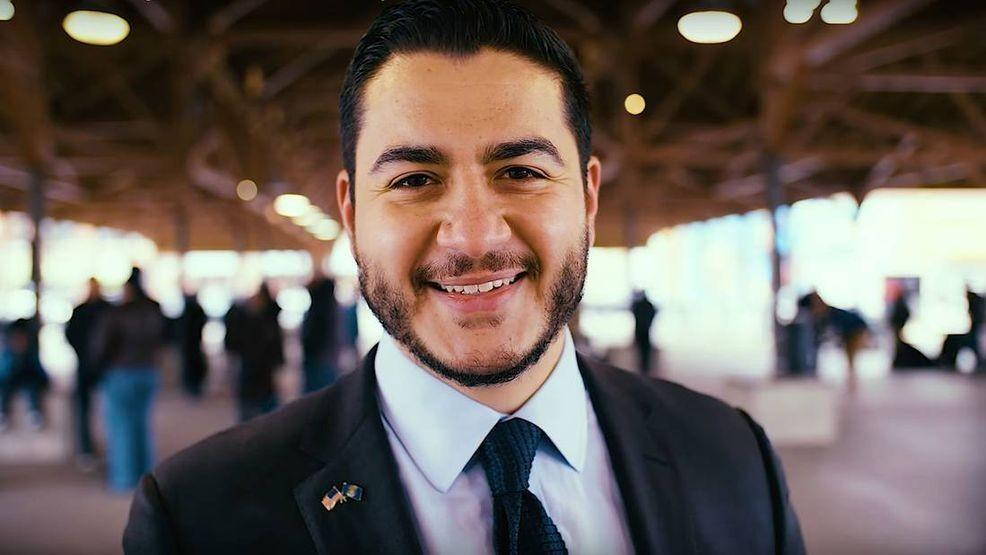
  • Michigan Sent a Message: People Vote With Their Wallets, Too

    Michigan Sent a Message: People Vote With Their Wallets, Too

    Abdul El-Sayed’s victory in Michigan’s Democratic primary for the U.S. Senate should be examined beyond his religion or ethnic background. His campaign focused on issues that directly affect the daily lives of millions of Americans: healthcare, housing, the cost of living, and the influence of money in politics.

    Abdul El-Sayed’s recent victory in Michigan will generate headlines for many reasons. He is Muslim, of Egyptian descent, progressive, and he defeated Haley Stevens, a member of Congress who had significant support from the Democratic Party establishment.

    But focusing primarily on El-Sayed’s religion would miss one of the most important lessons of this election.

    El-Sayed campaigned on Medicare for All, affordable housing, lowering costs for working families, and reducing the influence of big money in American politics.

    And voters responded.

    The question should not be whether a candidate is Muslim, Jewish, Christian, Latino, Black or white.

    The more important question is:

    What is that candidate proposing to improve people’s lives?

    The Everyday Economy Matters

    The United States remains one of the world’s greatest economic, technological and military powers. American corporations rank among the most successful companies on Earth, and the American economy generates extraordinary wealth.

    Yet millions of Americans continue worrying about much more basic questions.

    How much will the rent or mortgage cost?

    What happens financially if someone in the family becomes seriously ill?

    How much will health insurance cost next year?

    How much food can a paycheck buy?

    Will their children ever be able to afford a home?

    There is a contradiction here that American politics should not ignore.

    Corporate profits are not inherently a problem. Profitable companies are essential to investment, innovation, employment and a successful market economy.

    The political problem begins when people see enormous prosperity around them while believing that their own standard of living is not improving at the same pace.

    A healthy economy needs successful businesses.

    But it also needs workers who can live decently from the product of their labor.

    Why Does America Spend So Much on Healthcare?

    Healthcare may provide one of the clearest examples.

    The United States spends considerably more per person on healthcare than the average among developed OECD economies.

    Americans therefore have every right to ask whether they are receiving results proportional to what the country spends.

    That is a legitimate question regardless of whether someone is Republican, Democrat, independent, conservative or progressive.

    Healthcare reform should not automatically be reduced to an argument about capitalism versus socialism.

    It should begin with a simpler question:

    Can we build a system that works better for the American people?

    What Can We Learn From Europe?

    We should also avoid simplistic comparisons.

    It would not be accurate to claim that every European lives better than every American. Europe contains very different countries, economies and standards of living, while the United States continues to offer extraordinary levels of income, innovation and economic opportunity.

    But there are aspects of several European systems worth examining.

    Citizens in many European countries have access to universal or broadly accessible healthcare, legally protected vacation time, family leave and stronger public social protections.

    The United States historically chose a different model.

    The answer is not to copy Europe blindly.

    The question should be:

    What can America learn from policies elsewhere that actually work?

    A great nation cannot measure its greatness exclusively by the size of its economy, its military strength or the value of its corporations.

    The quality of life of its citizens matters, too.

    Big Money and American Politics

    Another important part of El-Sayed’s campaign was his criticism of the enormous amount of money surrounding American elections.

    This is not exclusively a left-wing or right-wing issue.

    When millions of dollars from organizations, corporations, political groups and wealthy donors pour into elections, ordinary citizens have every right to ask how much their own voices matter.

    Political campaigns will always require money. Communicating with voters, organizing volunteers, traveling and advertising all cost money.

    But there is a difference between financing democracy and allowing financial power to determine who gets heard.

    A healthy democracy must protect that distinction.

    The Lesson From Michigan

    That is why explaining Abdul El-Sayed’s victory simply by pointing to Michigan’s significant Muslim population would be far too easy.

    His identity is obviously part of his personal story, and it may have mattered to some voters.

    But there was something else.

    There was a political program.

    There were voters concerned about healthcare, housing, the cost of living and the influence of money on government.

    That should be a warning to both major political parties.

    Americans may eventually become tired of hearing only about who the enemy is, who belongs to the left, who belongs to the right, who is socialist, who is MAGA, who is progressive and who is conservative.

    After all those arguments, a family still has to open the refrigerator, pay the rent, make the mortgage payment, receive the medical bill and check the balance in its bank account.

    At that moment, politics takes on a very different meaning.

    Put Citizens First

    America does not need to abandon the market economy that helped make it one of the world’s great powers.

    America needs to make that economy work better for more of its citizens.

    Companies should be able to grow.

    Entrepreneurs should be able to invest.

    Innovation should be rewarded.

    But workers should be able to prosper as well.

    Someone who works honestly should reasonably be able to aspire to a home, affordable healthcare, adequate food, an education for their children and a dignified retirement.

    Those aspirations should not belong exclusively to Democrats or Republicans.

    They should be American aspirations.

    Michigan has just offered the country an interesting political lesson.

    Perhaps more Americans are beginning to look beyond the label attached to a candidate and pay closer attention to what that candidate proposes to do about their everyday lives.

    Muslim, Jewish, Christian, Latino, Black or white, families ultimately face many of the same bills.

    And politicians who understand that reality may also understand where part of the American electorate is heading.

    Horizonte Cubano News
    Opinion & Analysis